This is part two of our Japan 2025 trip. Part one is here.
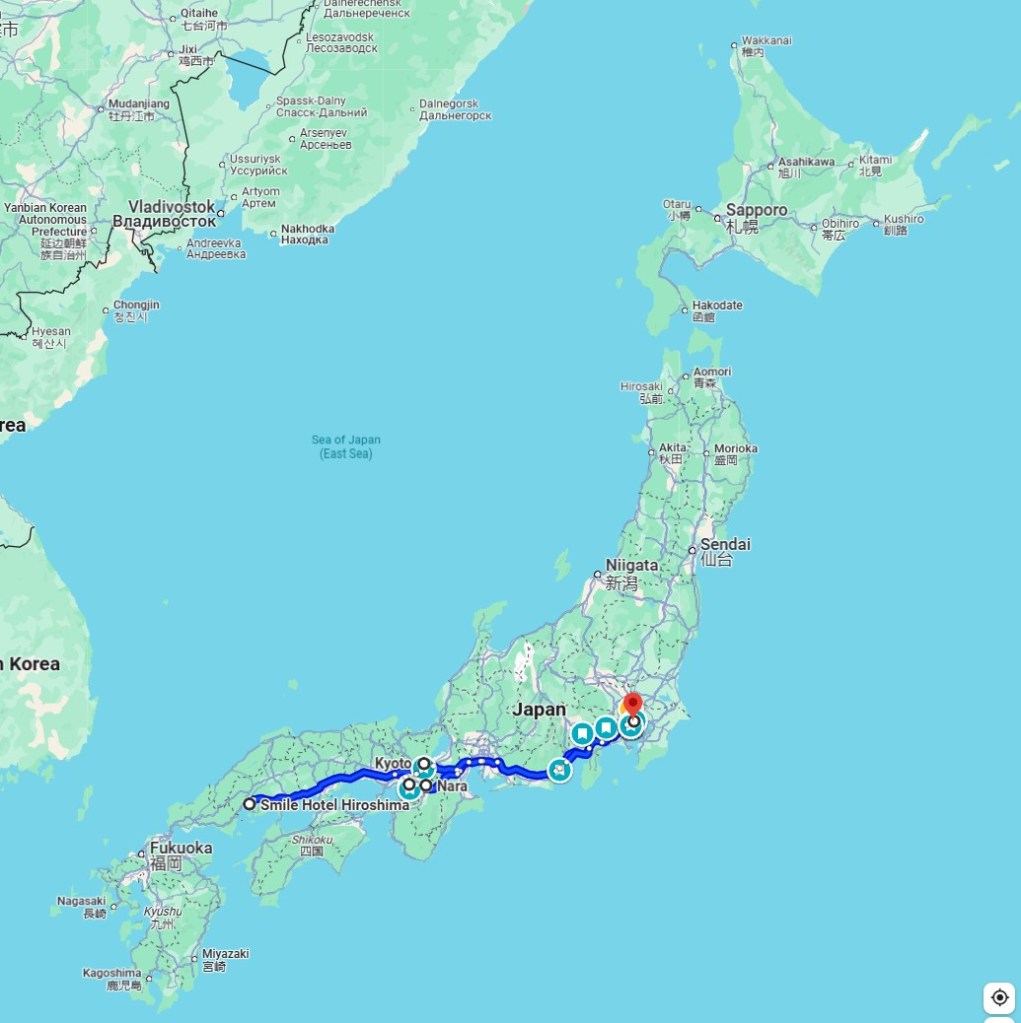
We’re traveling to Hiroshima today from Osaka.
Hiroshima, of course, is famous for suffering the horrendous tragedy 6 Aug 1945 when the first ever Atom Bomb was used in war. The effect was devastating wiping out nearly half of the population instantly. Countless others died in the years following from the effects of the radiation. Hiroshima people have turned this tragic event into a shrine for peace and a constant reminder to the world that the use of nuclear weapons is evil.
Jane and I wanted to visit this city on the last trip, but we couldn’t quite fit it into the schedule.
We caught the Shinkansen from Shin-Osaka station at 11.20 arriving at 12.51 (yes, it arrived dead on time). Our hotel was not far from Hiroshima station, so we just caught a taxi to the Smile Hotel. We were too early for check-in, so we dropped our bags, and embarked on a 1km walk to the Peace Memorial Park.
Hiroshima had a very different feel to the giant metropolises of Tokyo and Osaka. The streets were wide and far less crowded. The hustle and bustle were replaced by calm and serenity. At last, some relief. It was a cold day so we went into the Peace Memorial Museum to learn more about the 1945 event.
After purchasing the 400 yen ($4.40 AUD) we joined the line that snaked around the various exhibits. There were lots of people in the museum – all silent. It was quite an eerie feeling. People quietly reading the stories, trying to imagine what was like. I found myself quite emotional while reading about the people living there at the time.
We made our way back to the hotel, as it was check-in time. We will be revisiting the peace park the next day as part of the Hiroshima and Miyajima tour.
The Smile Hotel is “no-frills”. Rooms are only serviced every three days. Amenities, such as toothbrushes, combs, sewing kits, and yes pyjamas, can be taken from a store next to the reception. Towels can be changed each day by leaving them outside the door. Our room was nice. Again small, but clean and comfortable. The shower was hot and strong with a rain-shower head. Very welcoming on a cold day.
We ventured downtown to check out the shopping. As we’d had enough of ramen, sushi and other Japanese food, we went looking for “ethnic” restaurants. We found an Italian place simply named “Pasta”. The menu was in Japanese and the waiter’s English was not strong, but despite that we had a delicious pasta and garlic bread and a couple of glasses of decent Italian red.
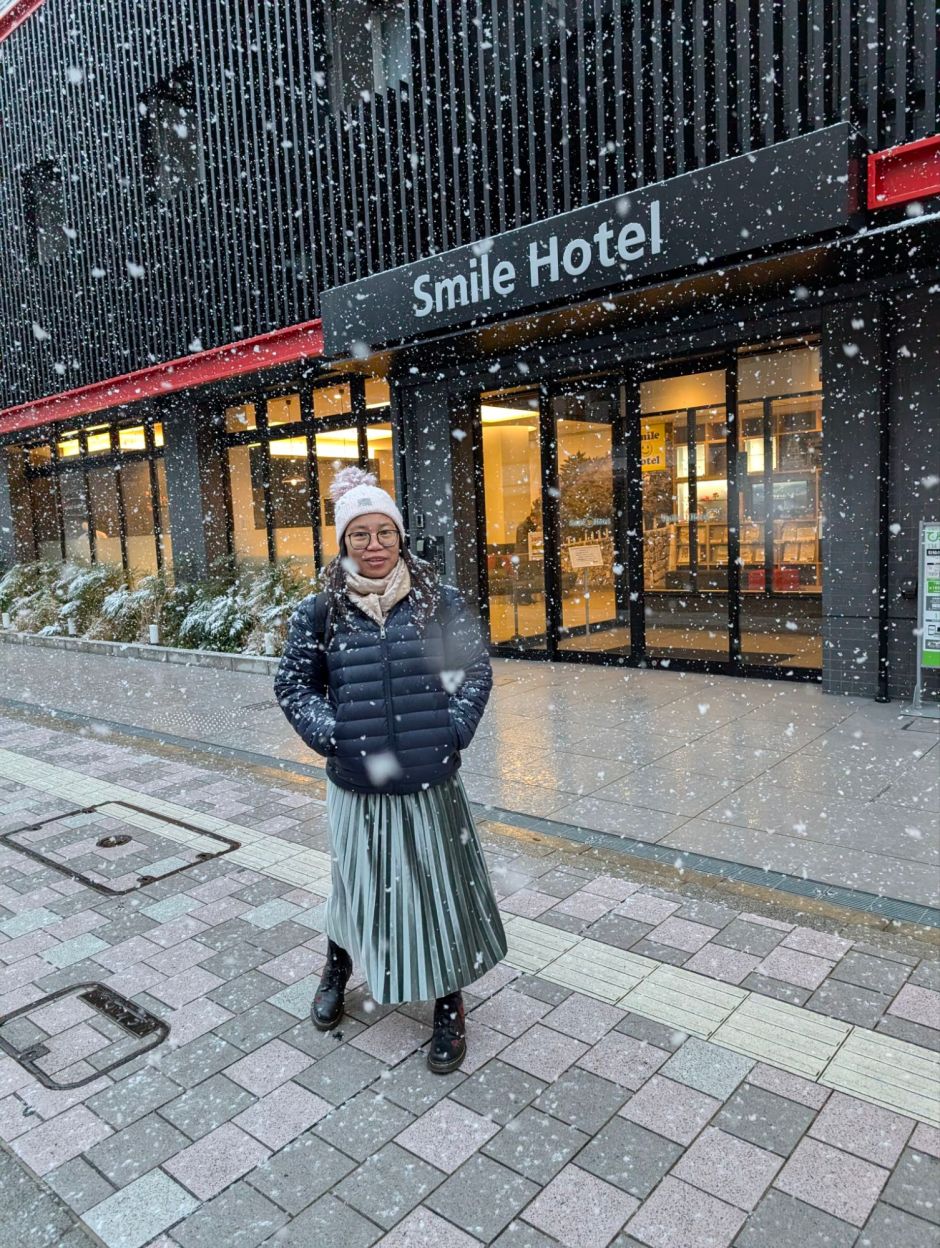
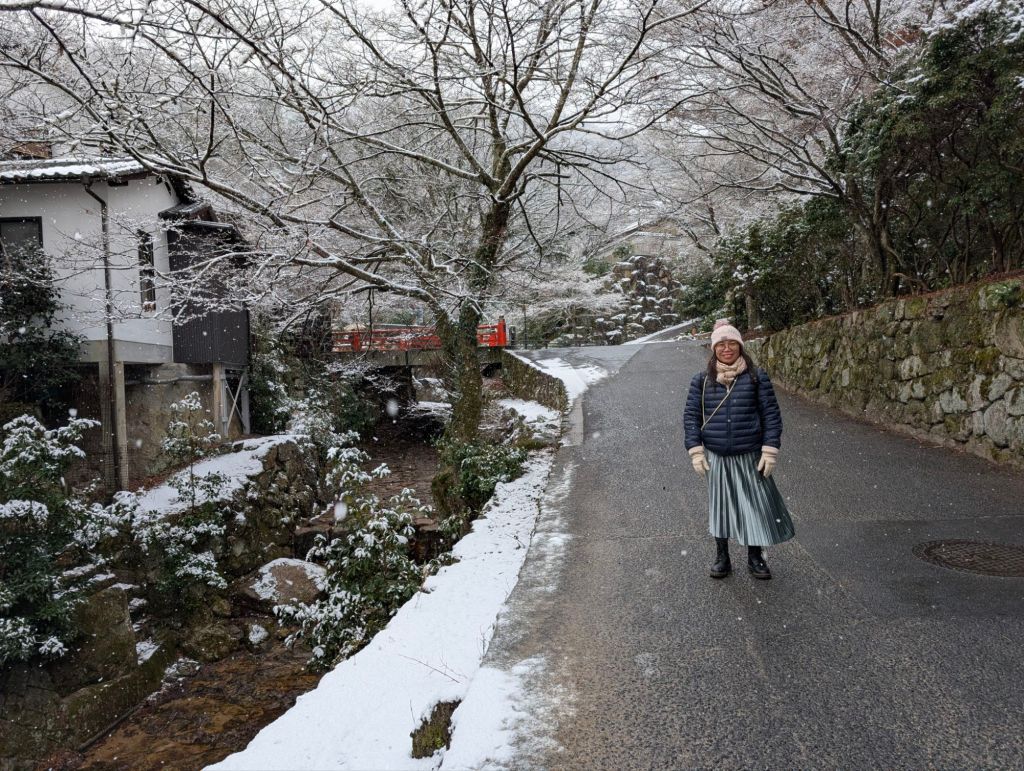
The next day was the tour of Miyajima Island and Hiroshima Peace park. Our guide was due to pick us up from the hotel at 7.30, but I managed to get Jane out of bed at 6.30 to try and get some breakfast. It was going to be a big walking day, so we needed to fuel up. Ramen on a cold morning hit the spot. As were finishing the meal Jane noticed with great excitement that it started to snow outside. She ran out of the restaurant gleefully to “catch some flakes”.
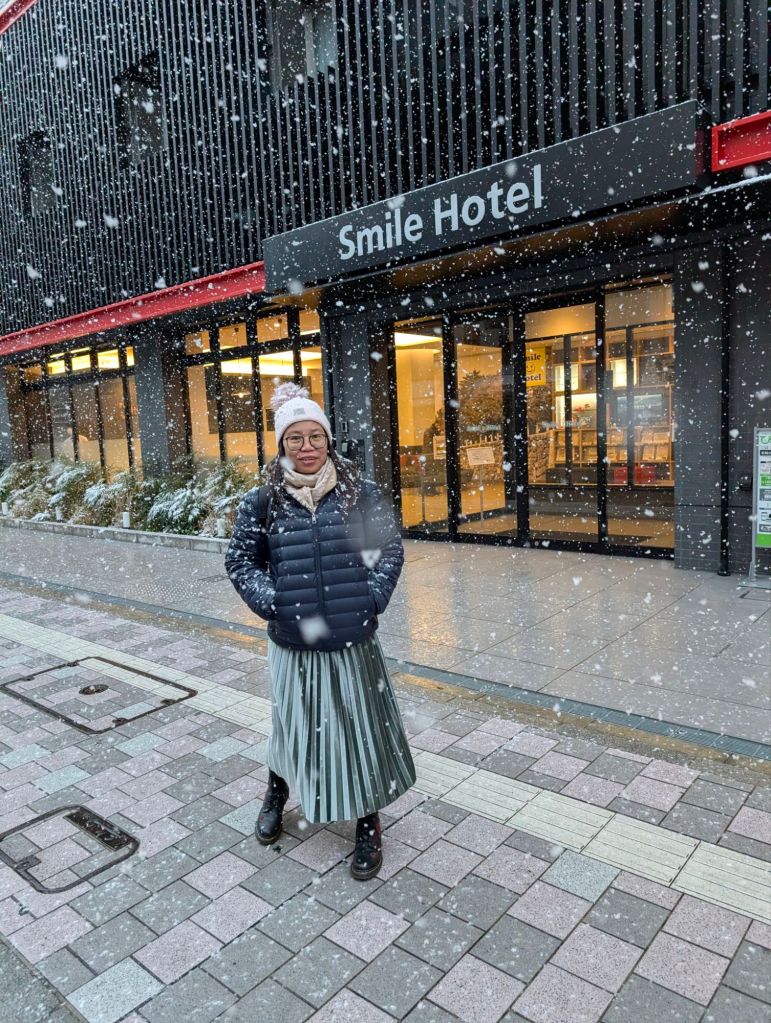
We proceeded to take a million photos as we didn’t know how long it would last. It lasted all morning and got a lot heavier. Sei (pronounced “Say”), our guide was waiting at the hotel. He outlined the itinerary. It was a walking tour, with quite a bit of public transportation. Our JR Pass helped a lot, but did not cover busses and trams.
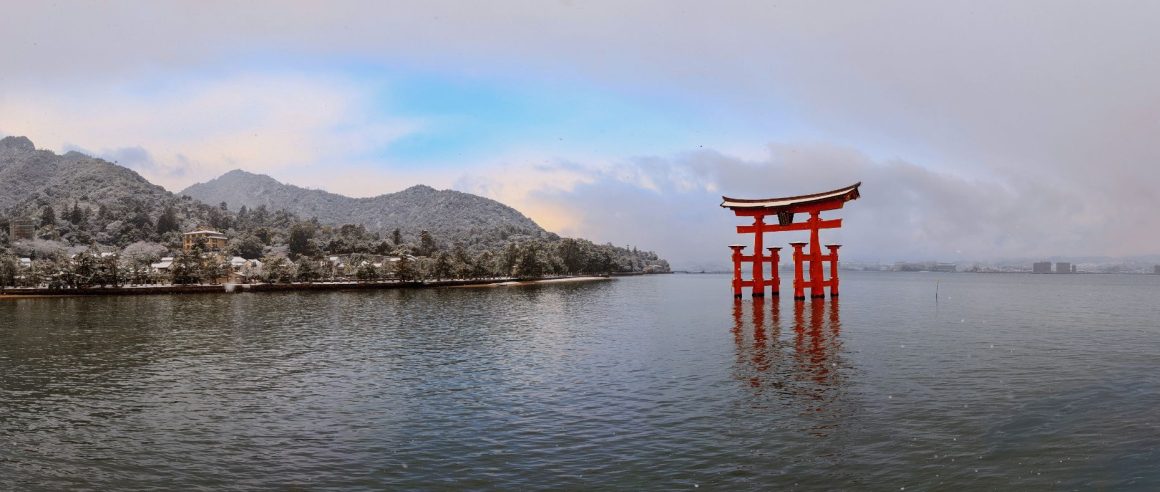
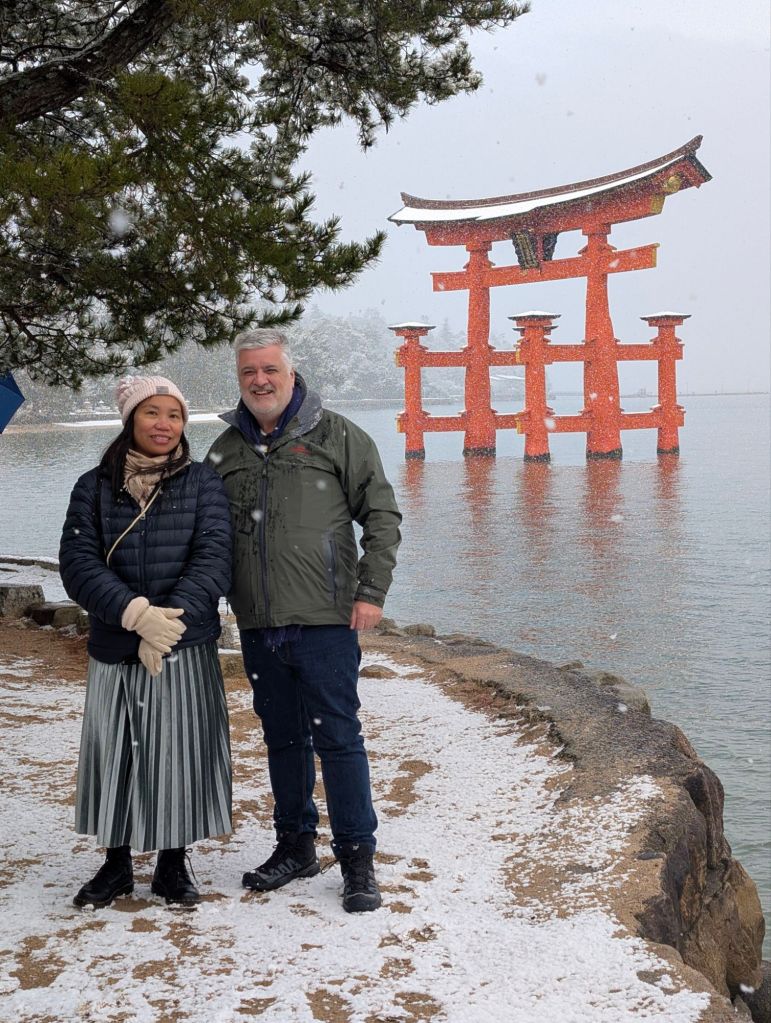
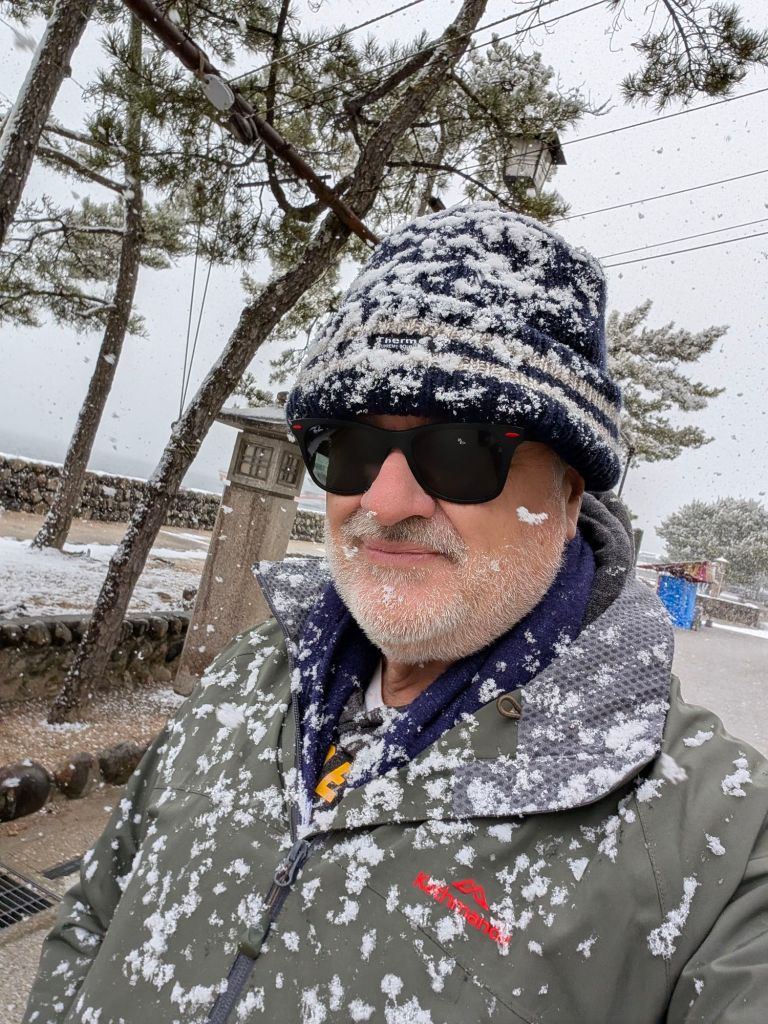
First was a bus and train ride to the ferry terminal for the trip to Itsukushima, also known as Miyajima. It is known for its ancient temples and the large red wooden “gate” just offshore. The ferry trip took just 10 minutes and we disembarked in the heavy snow and made our way to view the Torii Gate. Sei commented that he never seen the Torii Gate in the snow and was impressed how majestic it looked. A couple of deer were wandering around too, which seemed to make it more magical.
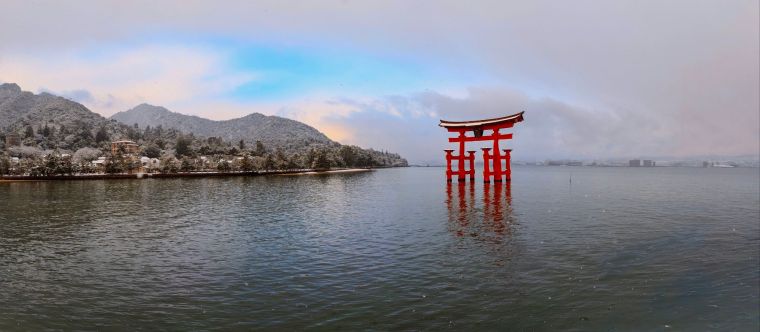
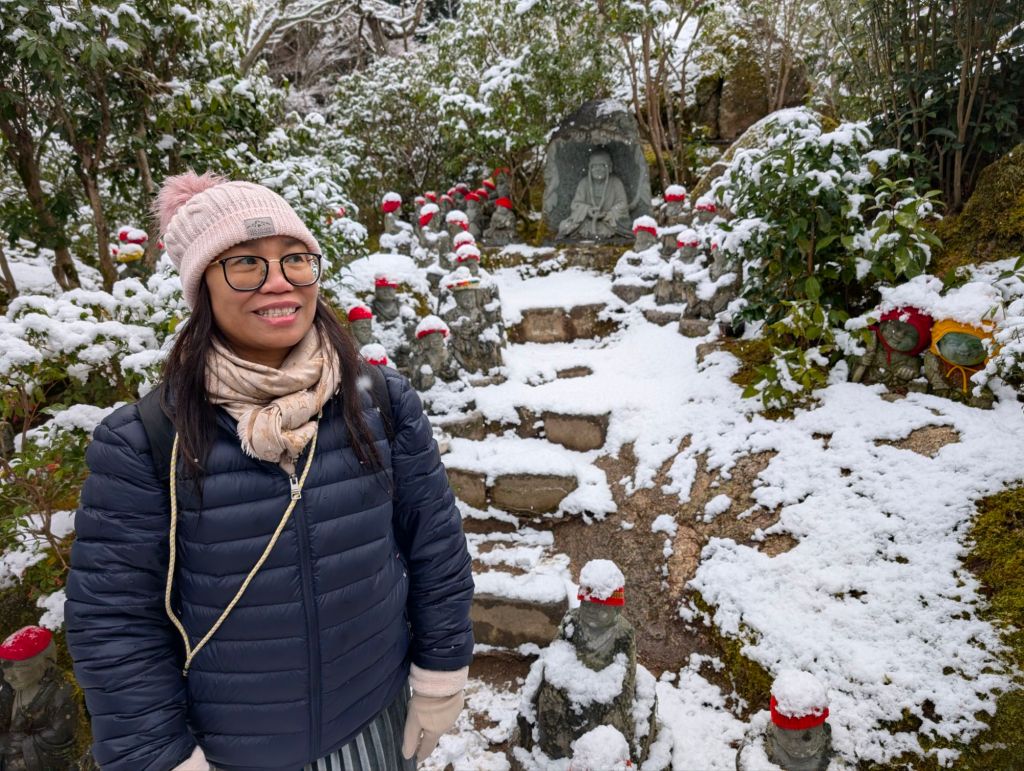
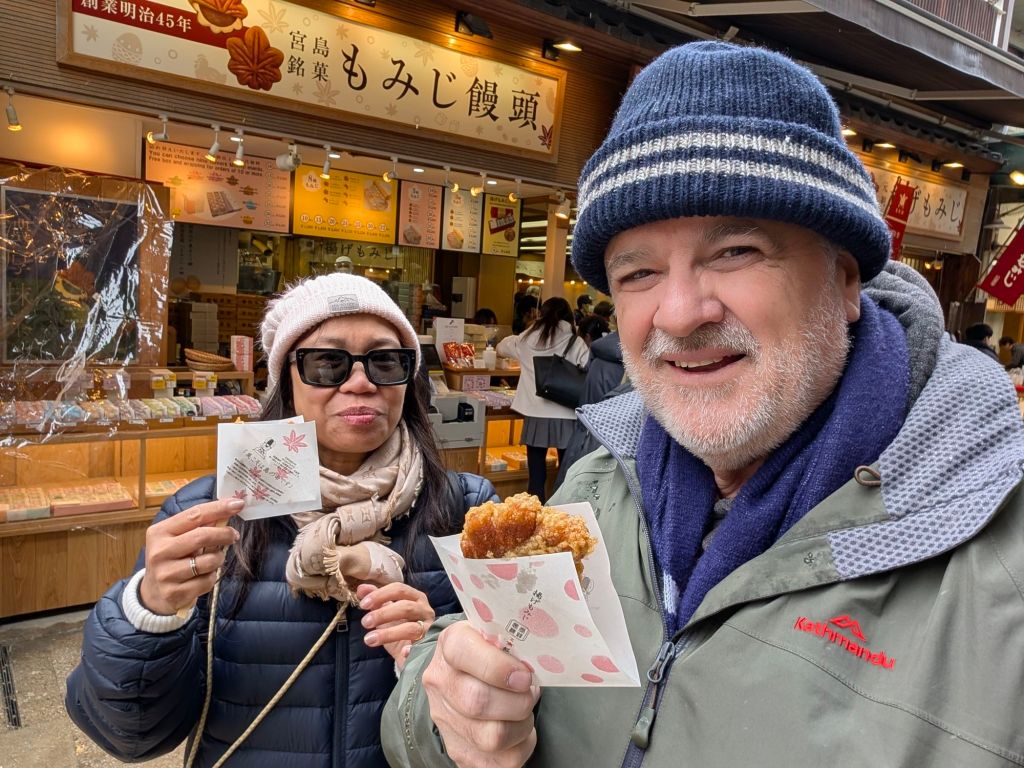
A short walk to the Itsukushima Shrine was the next stop. This is a 12th century Shinto Shrine. The structure was impressive with stunning views over the bay and the Torii Gate. Up the hill another important shrine of the island, Diasho-in. This is a Buddhist temple, which struck me as odd being so close to the Shinto Shrine. When I asked Sei about, it he said most Japanese worship both Shinto and Buddhism. He said its not unusual for Japanese households to have tributes to both religions in them. The Buddhist temple was quite different from the Shinto, but equally impressive. Again, there were plenty of deer roaming around, quite comfortable being around the people. Sei left us for a while to roam around the shopping area before heading back to the ferry terminal. We sampled the island speciality treat Momiji manjū. A filled baked and deep fried rice cake. I had custard while Jane has red bean paste. It was still snowing and a hot snack as just the ticket. Jane had a Matcha Latte also – Matcha and red bean… there’s no accounting for taste!
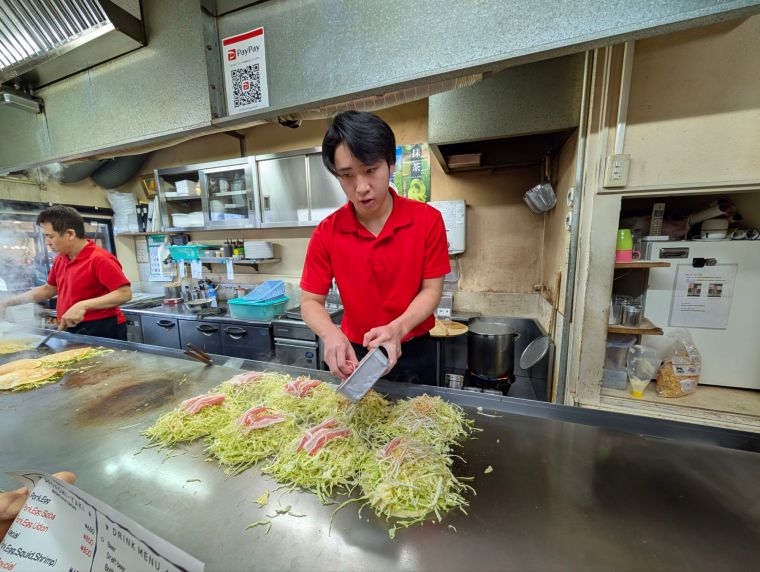
After the ferry ride and train to Hiroshima city it was time for lunch. Sei gave us a couple of options, but there was no other choice for me than to sample Hiroshima’s famous Okonomiyaki. This is a strange combination of pancake, cabbage, noodles, egg and other fillings cooked on a large barbeque plate, teppanyaki style right in front of you. It was a fun experience and delicious. I added seafood to mine, while Jane had the “classic”. Sei, a 78 year old small man gobbled his up quickly, while Jane and I struggled to finish ours. We asked Sei to explain to our hosts that we enjoyed the food but were just too full to finish it.
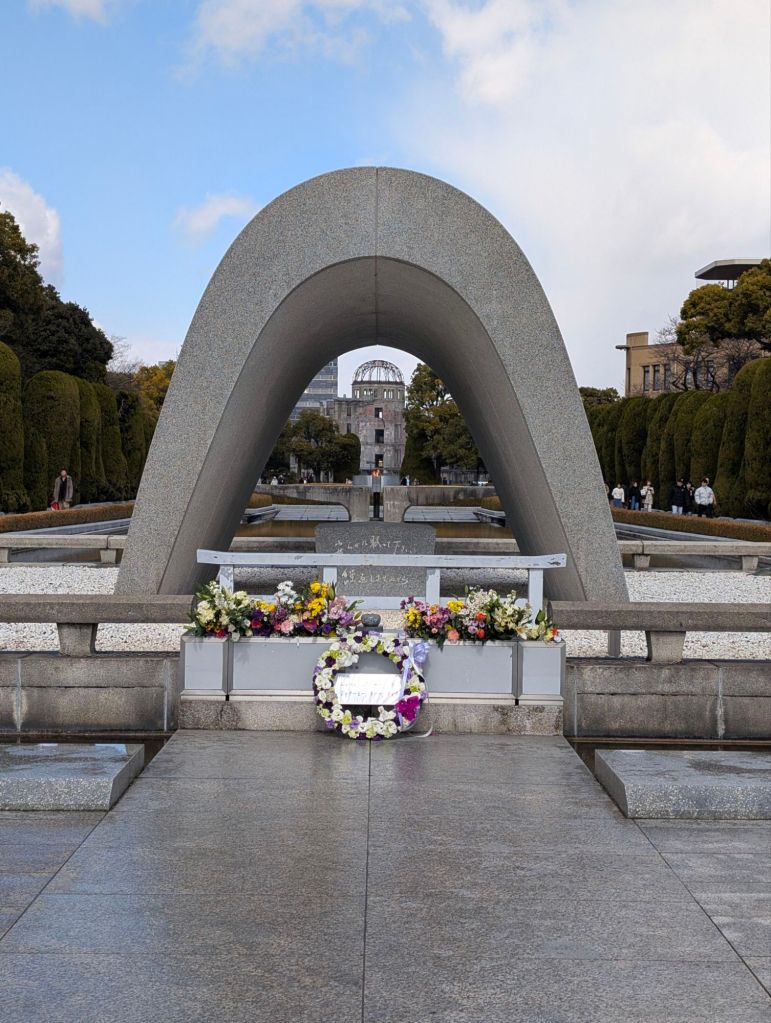
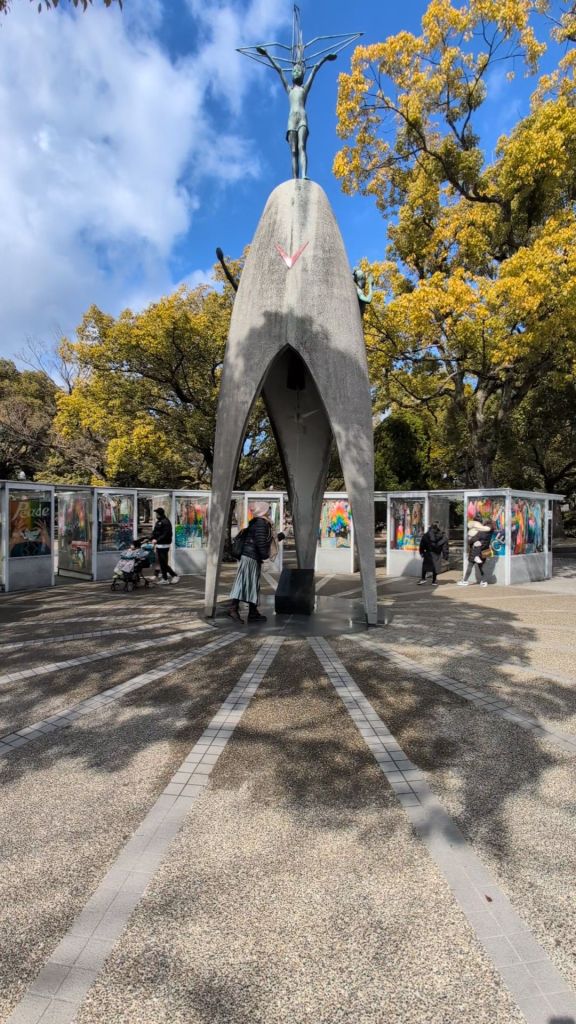
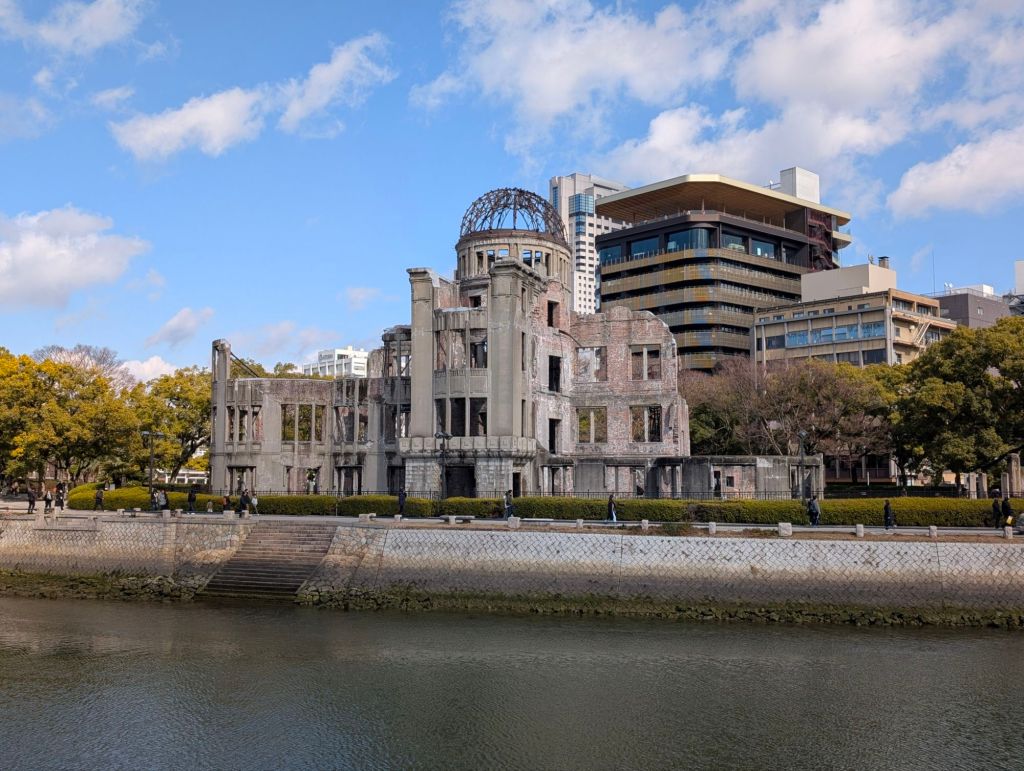
Back on the bus to the Peace Memorial Park. Sei took us to all the significant monuments. Sei came to Hiroshima in 1965, twenty years after the bomb. He recounted that the city had been rebuilt about 80-90% by then. The Atomic Bomb Dome (Genbaku Dome) was significant for me. A building that partially survived the blast so close to the detonation point. Again, it was a sombre reminder of what could happen to the world in the hands of madmen. Lucky there are no madmen in charge of nuclear weapons these days… phew!
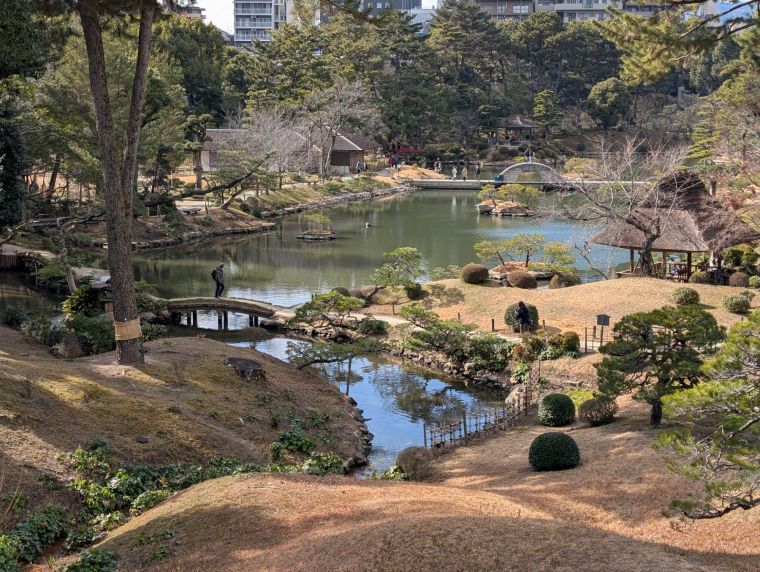
The tour did include a visit to the Peace Memorial Museum, but as we had already did that, Sei took us to the Shukkeien Garden. Getting there involved riding on two trams. Finding the 280 yen fare proved frustrating. The garden nestled in the heart of the city, is a miniature Chinese style garden. It has stopped snowing and the sun was out and it was almost warm. As we strolled around the garden we reflected on the day’s activities and learnings. How lucky we are to be here and experiencing this. “Hats off” to you Hiroshima, turning something so horrible into something beautiful and inspiring.
Sei guided us back to the hotel (more “fare fumbles”) and we thanked him for a wonderful tour, despite our feet crying out in pain.
The next day we were back on the Shinkansen to Shizuoka. I had booked a Ryokan in a smaller city to contrast the big city hotel stays. A Ryokan is a traditional Japanese inn. I wanted to experience some traditional Japanese culture away from the frenzy of Tokyo and Osaka. Shizuoka is a smallish city on the way from Hiroshima to Tokyo. We changed trains in Kobe. After arriving at the Shizuoka Station we caught a suburban train to Mochimune, where our hosts from Nihon Iro picked us up.
What a contrast it was! The room was spectacular, unlike the hotel rooms we’d stayed previously. The bedroom was spacious, there was a kitchen and dining area and the bathroom had a large bath.

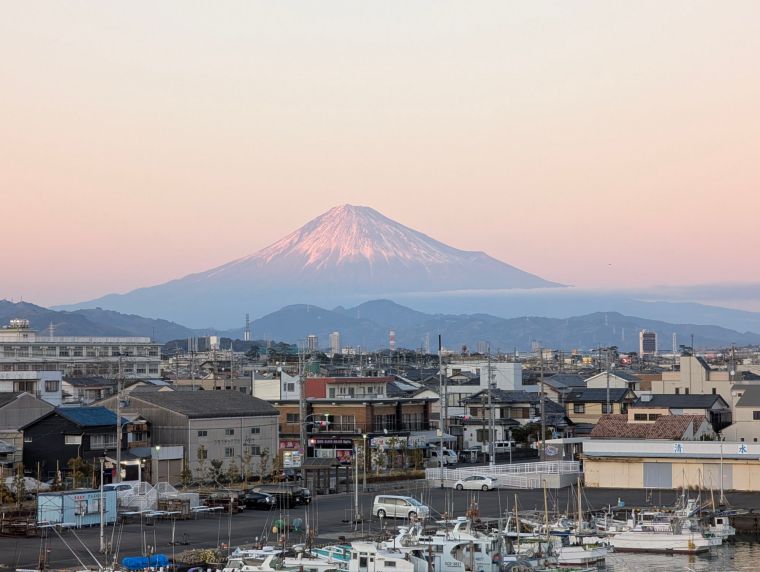
The receptionist suggested some things to do, so after unpacking we headed down the road via the stony beach. We stopped for an ice cream, before visiting the Mochimune Spa. This had a traditional Japanese Onsen. I’d wanted to try this as this uniquely Japanese experience, but I had read that they usually don’t allow people with tattoos to use the facilities. We tried out luck but was a hard “no” with the attendant gesturing the “no deal” arms crossed sign. On a positive note, the spa fronted onto the fishing harbour which afforded a spectacular view on Mt Fuji. The setting sun painted the mountain majestically with golden light. It was still too early for dinner, and we made our way back to the room, not before stopping to grab some drinks.
We were too tired to go out to find food, so we just had some cup noodles and snacks in the room. I ran the bath, and we soaked in there sipping our drinks.
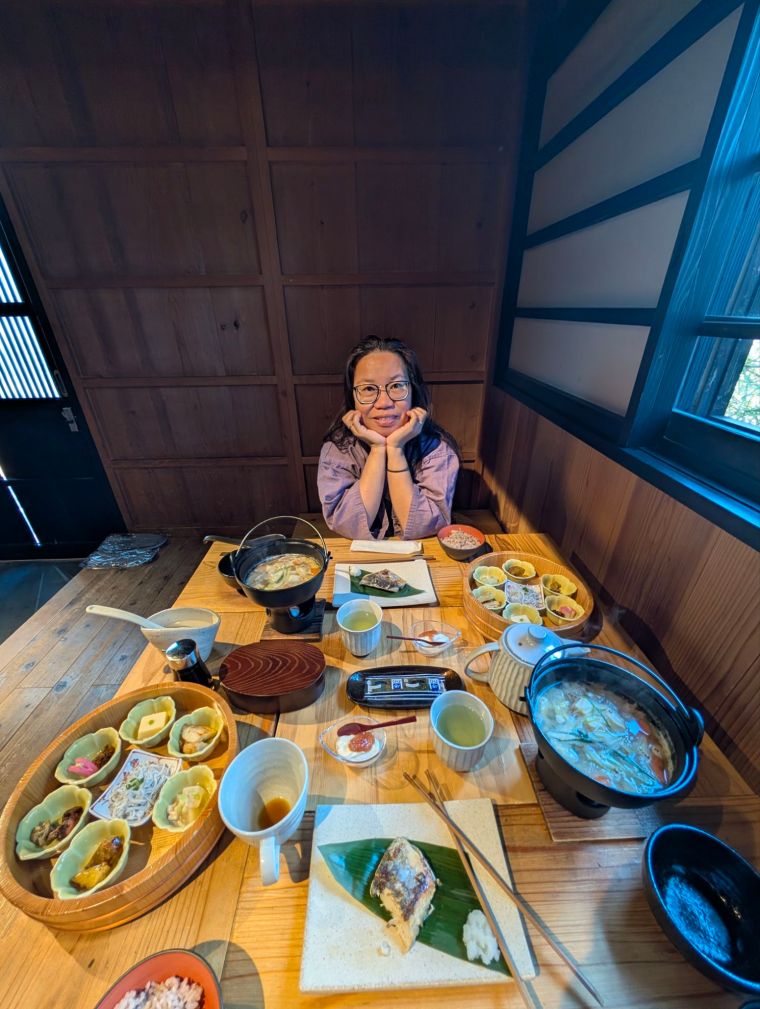
The next morning, we had breakfast prepared for us in the room. What a treat this was. It was a traditional Japanese breakfast with local produce. This is included wild boar caught in the nearby mountains and locally caught fish.
After breakfast we checked out wishing that we could have stayed another night. But as this was the last day of our JR Pass we had to leave for Tokyo.
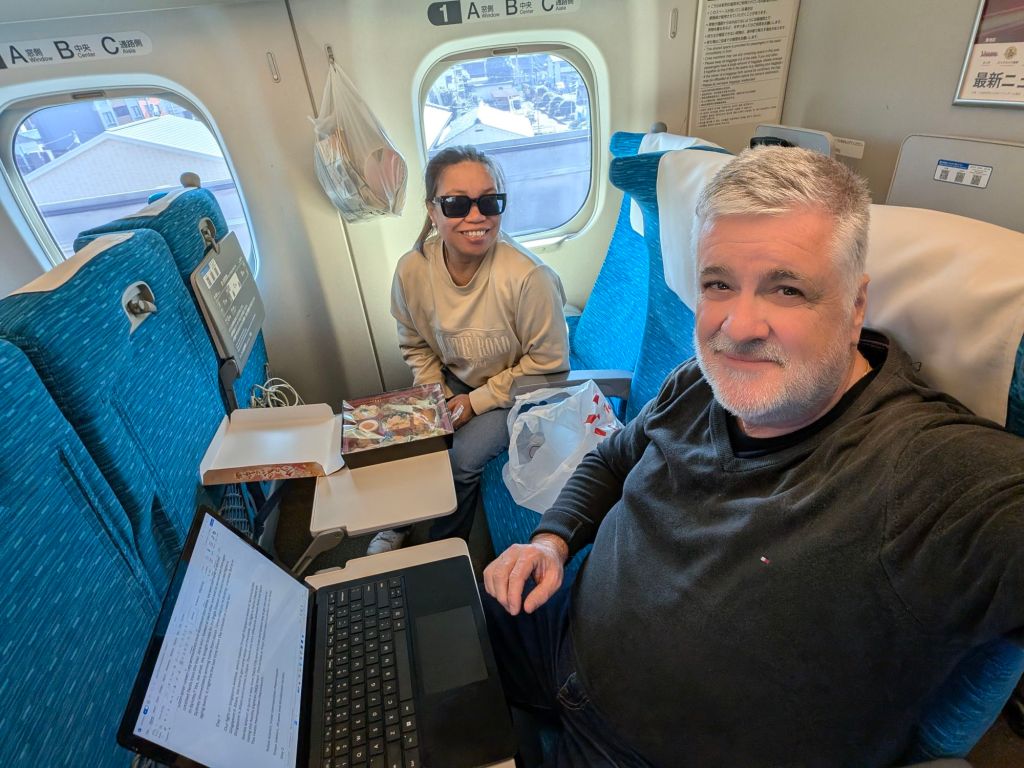
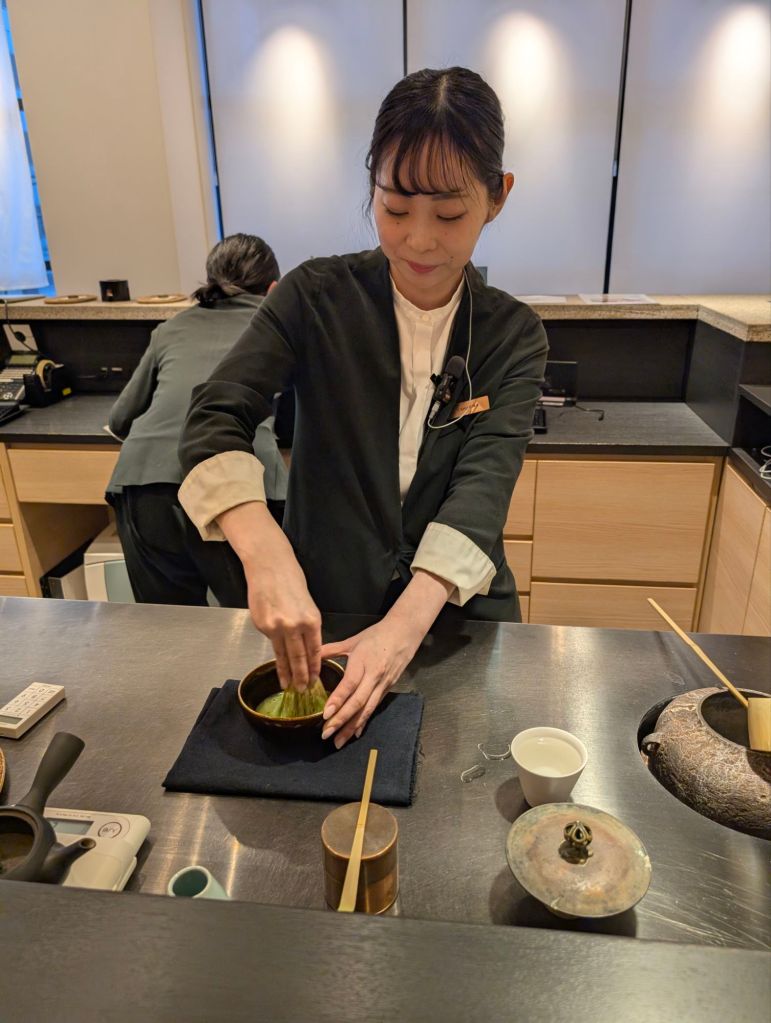
Back on the Shinkansen for the hour and a half trip back to hustle and bustle of Tokyo. Our hotel this time was in Shinbashi. It was a fair walk from Shinbashi station, so we decided to catch a taxi straight to the hotel, saving us the task of dragging our cases through the street. The taxi only took 10 minutes and cost 1500 yen ($16.50 AUD) – a good deal I thought, while Jane was frowning. The 1899 Hotel is a small boutique hotel with a tea theme. The room was very modern and continued the tea theme in the décor. Even the toiletries were green tea scented. This completed a clean sweep of hotels in our trip – all were excellent.
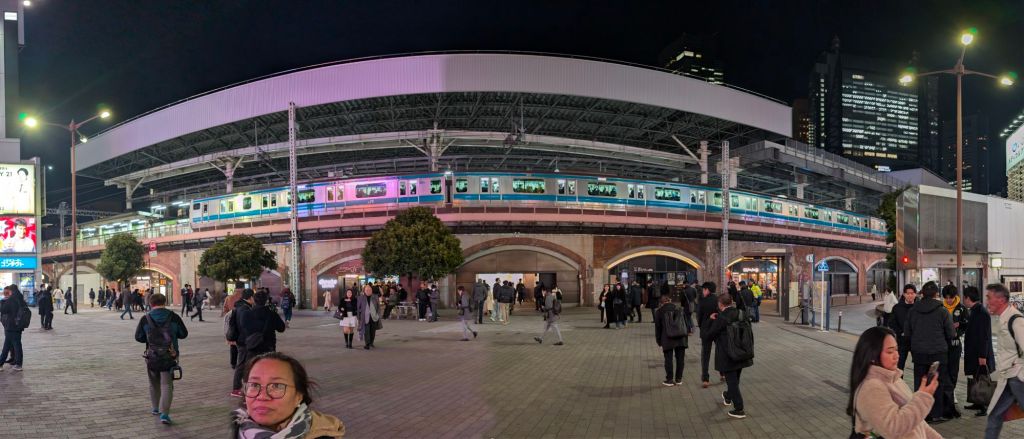
We walked into Ginza to explore the designer shops and grabbed dinner in the red light district in Shimbashi.
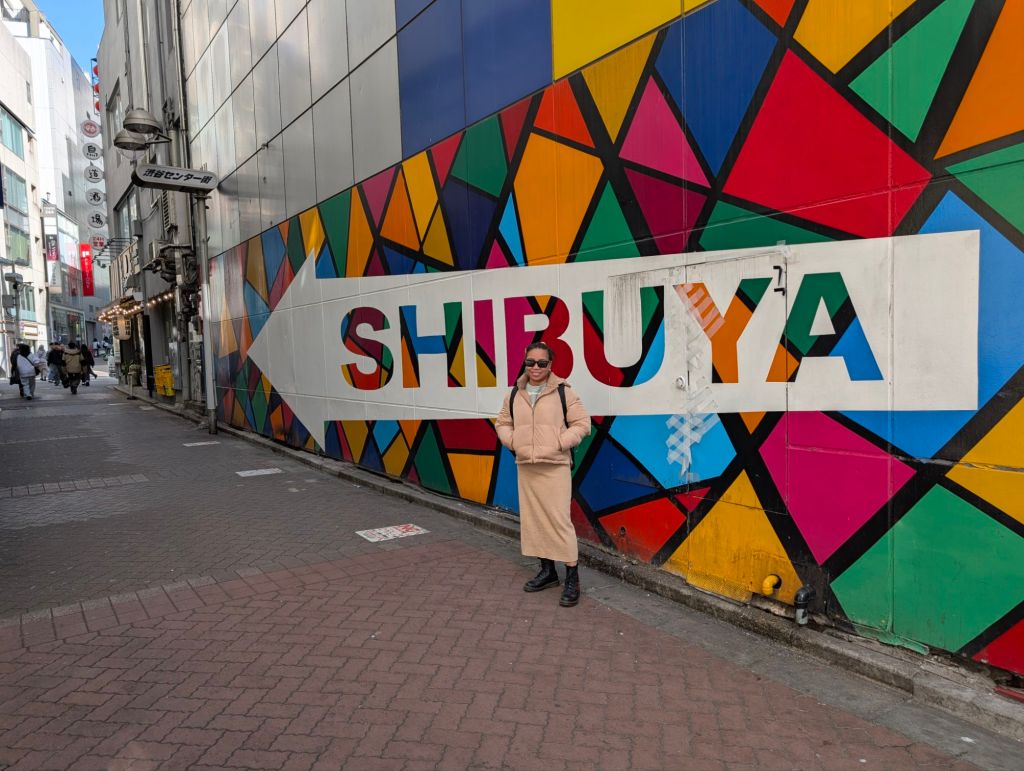
Our last day in Japan involved hunting for pasalubongs – gifts for people back home. We had an exhaustive list and it exhausted us. We travelled to Shibuya, back to Ginza and Tokyo station and clocked up the biggest step count of the trip. Fed up with Japanese food again, we opted for Italian and had a nice pizza and pasta at a restaurant close to our hotel. We packed our cases and retired early with aching feet. We had to be up early to catch the Narita Express to the airport for a 10am flight.
What a whirlwind trip this was. We crammed quite a lot into the 11 days. All very enjoyable and most fulfilling. We will return to Japan again the future. Next time perhaps hiring a car and exploring the hinterland staying in Ryodans. We both love the people, the culture and the natural beauty of Japan.
 JellyfishKing Travel
One thought on “Japan 2025 Part 2: Hiroshima & Shizuoka”